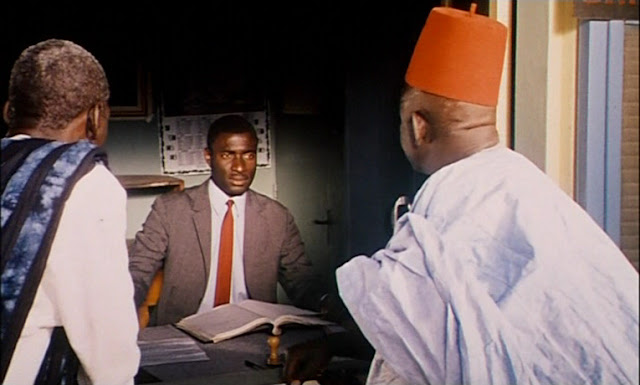
Mandabi, the postal order which is a part of life of africans who emigrated in Europe and send money back to their familly. This one have been sent from Paris to Dakar. But when the recipient understand he needs an ID to claim the order, the farce begins.
This is a poor, unemployed man. In his too large booboo, he tries to get his papers. And when he get it, crooks and neighbours come to claim their part in the name of solidarity with friends, employees, beggars...
« If begging becomes a profession in Senegal, what will happen to us ? » ask the main character.
Within the poor urban population, we are shown another conception of property, which lack of intimacy, and privacy. Among it, with a lot of humour, we see the emerging "evolved" elite : educated in european schools they take advantage of the situation, getting the crumbs of the colonial power after the decolonisation.
The character embodies an Africa that have nothing in hands, except dignity, and seems destined to be swindled. The humour become a need in front of this situation : how is it possible to get less rich after recieving money than before ? This movie is a Farce, of course, but a symbol of a true north/south relationship.
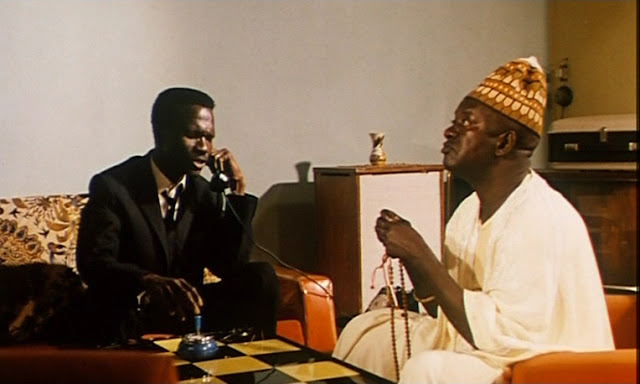
The audience was laughing, was moved... without difference between french and senegalese that were present (the projection took place in the Senegalese Shelter). Sembene made a movie that could talk to both populations: African and European. First one are ready to laugh about the situation of their country, of an honnest man. Second one is catched by the universal laught and a new understanding, a new point of view about the post colonisation in Africa. Sembene achieves to bring the whole thing together without manicheism.
Moustapha Alassane, present during the projection, said a few words when a spectator asked him about « fight against poverty » in Africa.
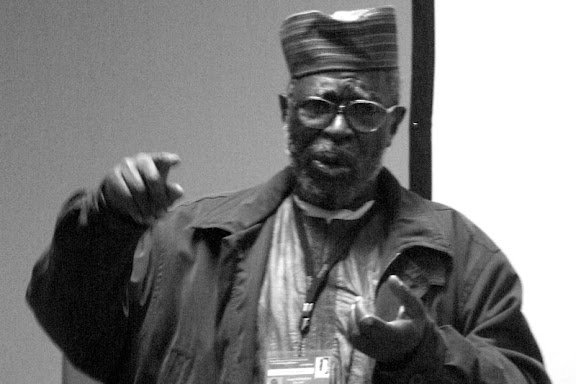
« What is poverty ? Is it something that dispeared in Europe or in America ? It is a word used in a wrong way, used only for Africans. But poverty does not exist : there is only under development. It is different. The world did not let us time, and because there are things we can't do, because we don't have the knowledge, or the technics, we are considered poors. But poverty is everywhere : thoses who are not considered as poor are thoses who could develop themselves.
As you saw in this movie, recieving money from Europe is an opportunity to swindle. This allow small employees to get a little more money, but bribery became an industry. It's not a few bags of rice, as in this movie, but tons and tons that were stolen, misappropriated. It's not by sending money we will help these countries.
There are so many things that were invented to swindle people."
Mandabi - The Money Order - 1968
Realisation and screenplay : Ousmane Sembene
WIth Makhouredia Gueye
Language : Wolof and French


 Posts
Posts

